5-Star vs 3-Star AC: Does It Really Save Power?
Air conditioners are one of the biggest contributors to your electricity bill. Choosing the right star rating significantly affects how much you pay every month. This guide explains 1-Star to 5-Star ratings in an animated visual format + real savings + Tamil quotes + buying guidance.
AC Star Rating Explained
❄️ How AC Airflow Works
A simple animation showing how an air conditioner pulls warm air in and blows cool air out.
🔵 Cool air blows downwards · 🔴 Warm air is pulled up — This is the basic airflow cycle of an AC.
What Do Star Ratings Really Mean?
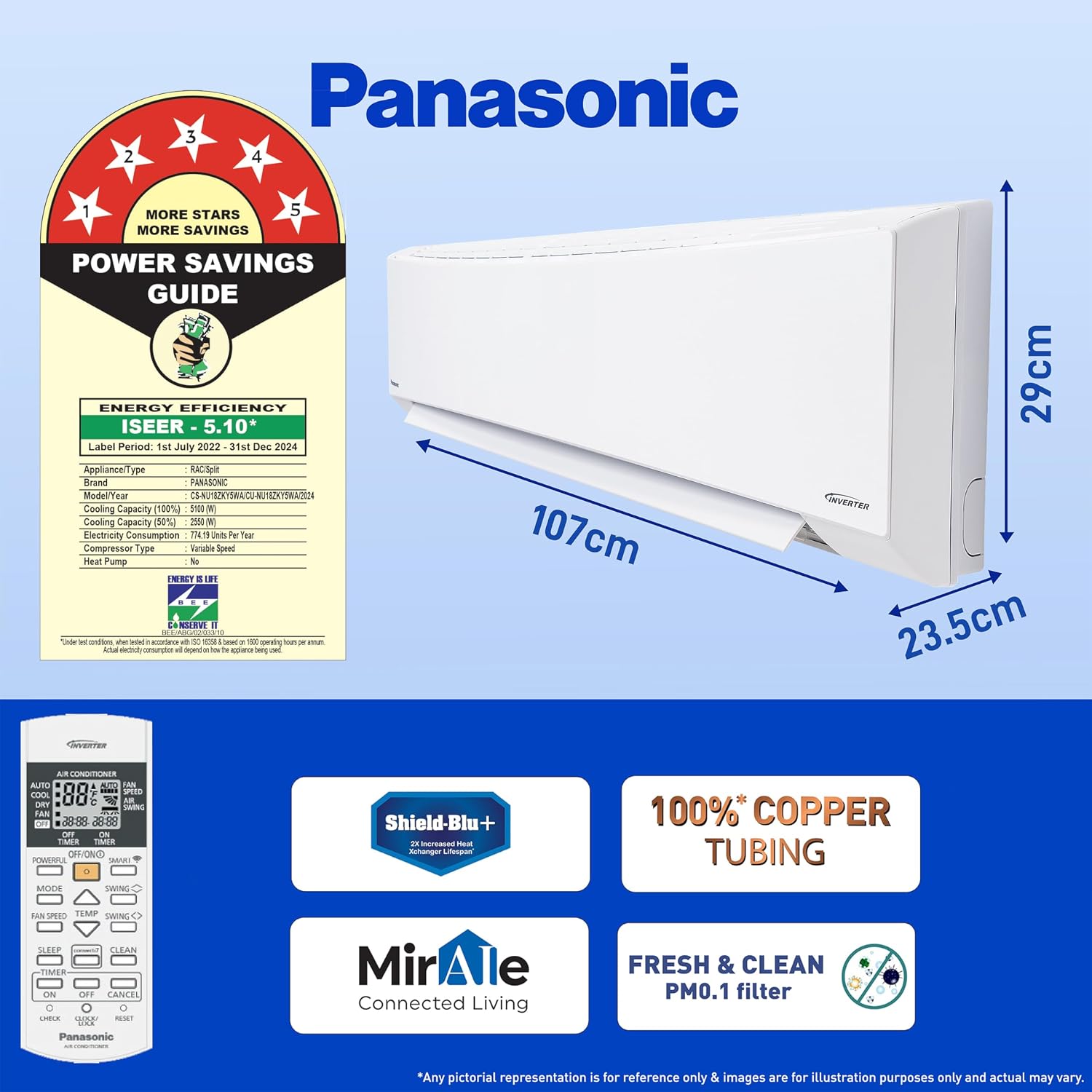
Star ratings (issued by BEE in India) show how energy-efficient an AC is. More stars = less electricity used for the same cooling. A 5-Star AC consumes much less power compared to a 3-Star model under similar usage.
Why Actual Savings Differ in Real Life
- Daily usage hours
- Your set temperature
- Room insulation & size
- Compressor type (inverter is best)
- Where you live (hotter places = more AC runtime)
- Filter cleanliness & maintenance
Savings Example (1.5 Ton AC)
- 3-Star AC: ~1.50 kW
- 5-Star AC: ~1.10 kW
- Usage: 8 hours/day
- Rate: ₹8/unit
Savings:
≈ ₹768/month
≈ ₹1,536 / 2 months
≈ ₹9,216 / year
FAQ
Does 5-Star always save 40%?
Not always — typical real savings = 20–40%.
Should I replace my 3-Star AC?
Do the payback math. If you use AC heavily, yes.
Does inverter matter?
Yes — inverter ACs save more regardless of star rating.
Cost Comparison: 3-Star vs 5-Star AC
Watch how the running cost differs between a 3-Star and a 5-Star AC when used daily.
Higher power draw (~1.50 kW). More runtime = more monthly units consumed.
Lower power draw (~1.10 kW). Significant monthly savings compared to 3-Star.