
Ceiling Fan vs BLDC Fan: Which Saves More Electricity?
Fans run for long hours in most Indian homes. Choosing the right fan affects comfort, noise, lifespan — and your electricity bill. This guide explains the technology, compares traditional and BLDC fans in detail, gives practical buying advice, and includes a calculator so you can estimate your savings for 2 months and a year.
Quick Facts
- Traditional ceiling fans typically consume ~75–90 W at full speed.
- BLDC (Brushless DC) fans typically consume ~25–35 W at full speed.
- BLDC fans can save 40–65% electricity compared to a regular fan depending on models & usage.
சத்தம் குறைந்த விசிறியை தேர்ந்தெடு…"
சரியான தேர்வு மின்சாரத்தை சேமிக்கும்.
1. What is a Traditional Ceiling Fan?
A traditional ceiling fan typically uses a single-phase induction motor with copper/aluminium windings and a regulator that reduces voltage to cut speed. Power dissipation occurs due to friction, copper losses, and inefficient speed control. The result: higher running watts and higher bills over long usage.

Atomberg Renesa / Efficio
~28W consumption, remote, energy-star rated. Good for bedrooms & living rooms.
Buy on Amazon2. What is a BLDC Fan?
BLDC fans use brushless DC motors with permanent magnets and electronic driver circuits (microcontrollers). They do not have mechanical brushes (so no brush friction), and speed is precisely controlled by the electronics — which prevents wasteful power dissipation. BLDC motors are inherently more efficient and provide smarter features (remote, timers, sleep mode).
Animated Comparison: Traditional Fan vs BLDC Fan
per fan (typical)
3. Technical Comparison
| Feature | Traditional Fan | BLDC Fan |
|---|---|---|
| Typical Power (full speed) | 75–90 W | 25–35 W |
| Efficiency | Moderate | High |
| Speed Control | Regulator (resistive / autotransformer) | Electronic (no energy loss) |
| Noise | Moderate | Very Low |
| Lifespan & Maintenance | Medium (brush & bearing wear) | Longer (less wear, solid-state control) |
4. Why BLDC Fans Save Electricity
- No brushes → less friction: Traditional brushed motors lose energy as brush friction; BLDC avoids this.
- Permanent magnets: Provide stronger magnetic fields for the same input power → more torque per watt.
- Electronic speed control: Microcontroller-based PWM runs the motor efficiently at required speeds; regulators in old fans waste energy.
- Lower idle & running losses: Integrated electronics optimize current draw across speeds, avoiding high losses at low speeds.
5. Who Should Consider Upgrading to BLDC?
- Homes with multiple fans running long hours (living room + bedrooms).
- Hot climates where fans are used through the day (Chennai, Coimbatore, Madurai, etc.).
- Rental properties where long-term operating cost matters.
- Users who want quiet fans and remote/smart features.
6. When a Traditional Fan Still Makes Sense
If initial budget is the primary constraint and fans are used only occasionally or switched off for most of the day, a traditional fan can be acceptable — but the long-term electricity cost and comfort trade-offs should be considered.
Electricity Saving Calculator — Estimate Your Savings
Enter how many fans you have, how many hours you run them daily, and your electricity tariff. The calculator shows savings per 2 months (typical billing cycle) and per year if you replace traditional fans with BLDC models.
Recommended BLDC Fans
Atomberg Renesa / Efficio
~28W consumption, remote, energy-star rated. Good for bedrooms & living rooms.
Buy on Amazon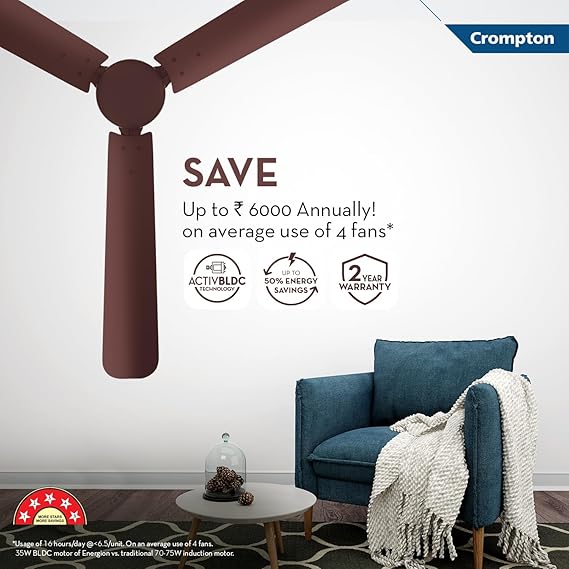
FAQ
Do BLDC fans work on inverter during power cuts?
Are BLDC fans expensive to buy?
Is maintenance different for BLDC fans?
© Thirai
